VF750 heading for the road again

Hi all,
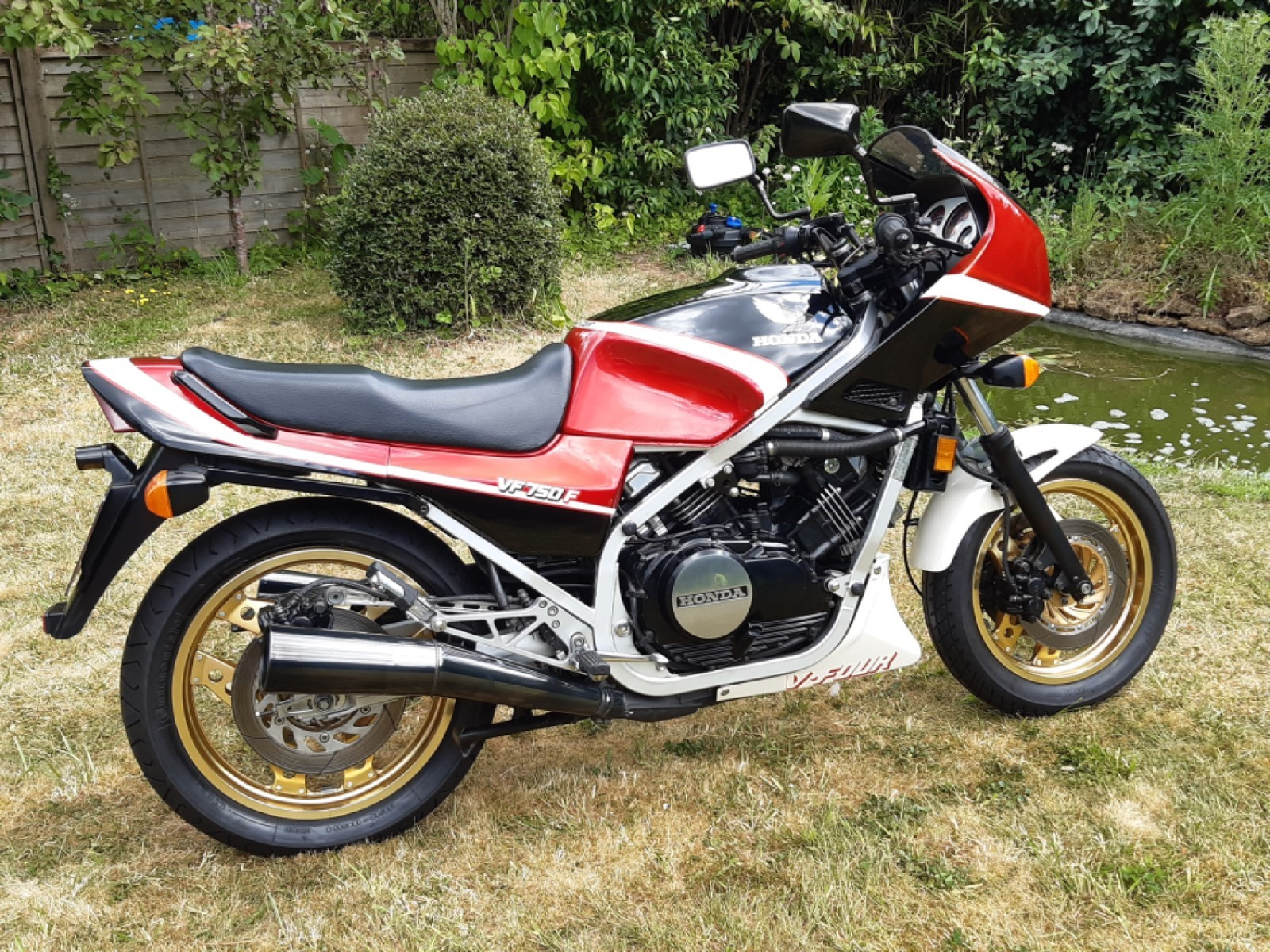
I’m the proud owner of a VF750F. I bought (swapped) the bike from new in 1984 for my CBX-C with Alan Mountain Motorcycles in York. I’d owned the CBX from new and it had only covered a couple of thousand miles but it was too big and heavy for me. My bike before that was… a VF750F. I lost heart with the previous VF when it needed cams and followers at 5000 miles but I loved everything else about the bike so I thought, ‘why not’ Honda will have fixed the problem by now. My current VF had to have new cams and followers at, yep, 5000 miles.
Anyway, the bike has been unused for about 15 years, I bought a VFR800Fi and that has been my main bike since, utterly reliable, so the VF has sat in the dining room.
I decided to go through the VF, front to back, and have just about finished. The carbs needed a full rebuild, of course, including diaphragms but that was not really problem. I replaced the manifold rubbers just to make life easier when it came to refitting the carbs, that is a difficult job! The fuel pump was shot but fortunately I acquired a huge box of used spares some years ago, including a fuel pump so no problem. The clutch slave cylinder needed rebuilding where the fluid had crystalised and but once again, not really a problem. Back in the 80’s I always used the Honda UC oil additive when I did a VF oil change and decided to continue with that.
All in all, the bike was in good shape, the cams and followers were like new with 12,500 miles showing, huge sigh of relief. But…
The filler cap seal has aged and turned into something that no longer resembles rubber, Bakerlite is the closet material that comes to mind. As far as I can tell the seal is not available as a spare, Honda will happily sell me a complete filler cap though. I have read a thread where the seal has been taken from a pattern filler cap and fitted to the VF cap. Can anyone confirm whether this eBay sale will do the job

Also, the service manual calls for ATF to be used in the fork legs. Was there a particular reason for this or was it just that specific fork oil wasn’t available in the 80’s? I honestly can’t remember when specific fork oil became available. If fork oil is preferred I would expect to use 5W, I weigh about 157 pounds and don’t carry a pillion.

Thank you in advance for any advice,
Chris.
image

2 Likes

Hi Chris,your 750 looks well.
The fuel cap you listed should do fine as a rubber donor,I think garyB had a thread on how to dismantle then fit to your cap.
ATF is about 7.5wt,and the hondas forks were under damped.
It is personal choice but I tend to use 10wt which does away with the feeling of riding a pogo stick
Best regards Bif

Thanks Bif. The bike is totally unrestored, the only thing I did when I bought it was fit a flap on the inside of the rear mudguard that prevented road dirt splattering the rear shock and linkages. When I stripped the rear suspension a couple of weeks ago there wasn’t a trace of corrosion and most of the original grease was still there, if a bit dry.
Having worked on plenty of bikes that have faced the weather it was a joy! Mind you, I suppose 12,500 of summer use isn’t a fair comparison.

That’s a really nice looking bike :heart_eyes:

1 Like

Hello again, long time since I’ve posted.

My VF750 is now registered as an historic vehicle so I though ‘time for a spin’, first time in the best part of twenty years! So, checked all the basics, removed the cam covers and checked the valve clearances, plenty of oil poured over the lobes, auxiliary tank hung from the ceiling, started almost straight away, brilliant!

Wheeled it out of the garage, two problems:

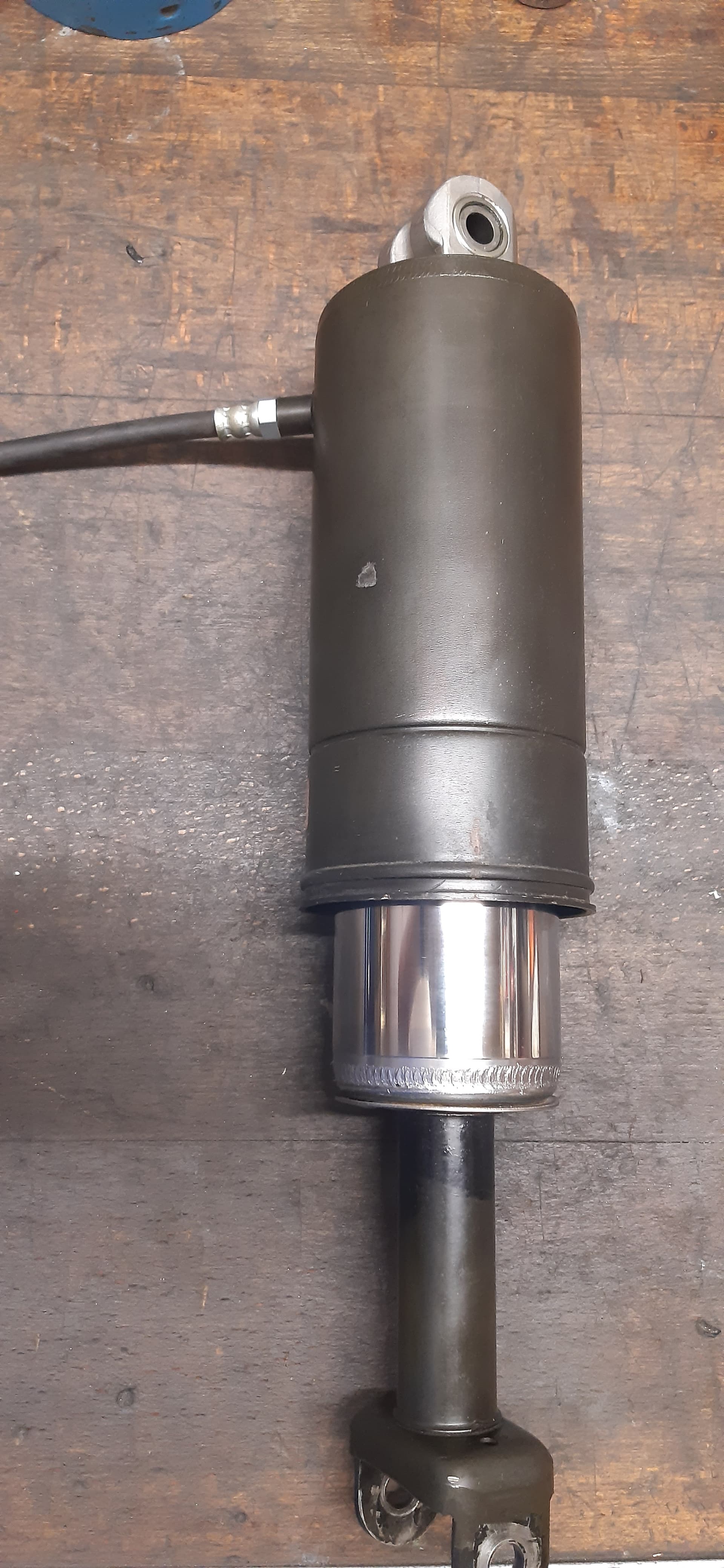
  1. The rear shock is very slow to rebound. I’ve been compressing it fully and let it rebound in my bearing pressing and it is improving but am I wasting my time? I know a modern shock is the better option, the original was never brilliant, but if I can keep it original I’d like to.
  2. The petrol tank seems to be blocked. With fuel in the tank and the tap removed no fuel comes out of either the normal or reserve holes. I don’t know what the tank looks like on the inside but I’m worried there are rigid pipes that have corroded and blocked. Has anybody else seen this? when I went through the bike in 2020 I suspect I only ran it from an auxiliary tank.

Any advice appreciated, thanks in advance,

Chris

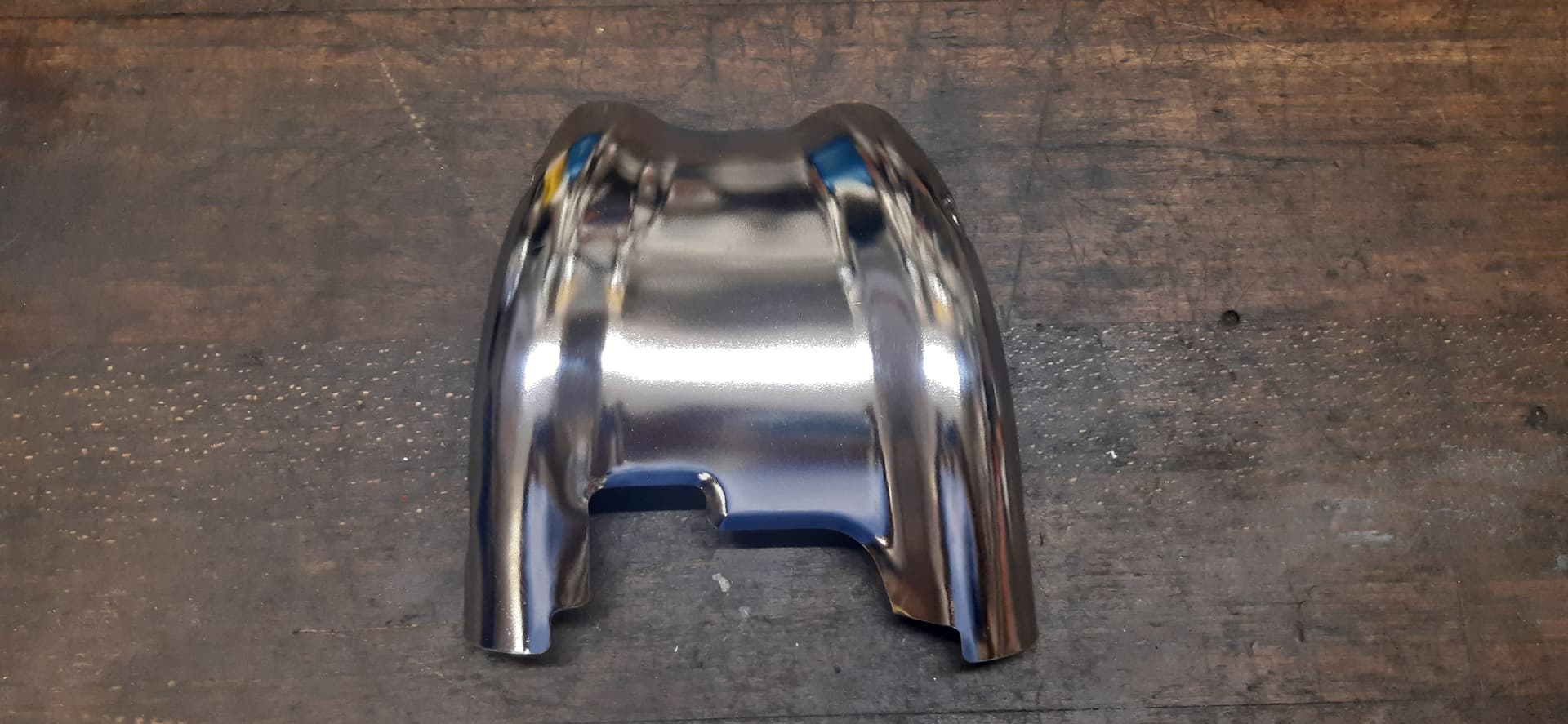
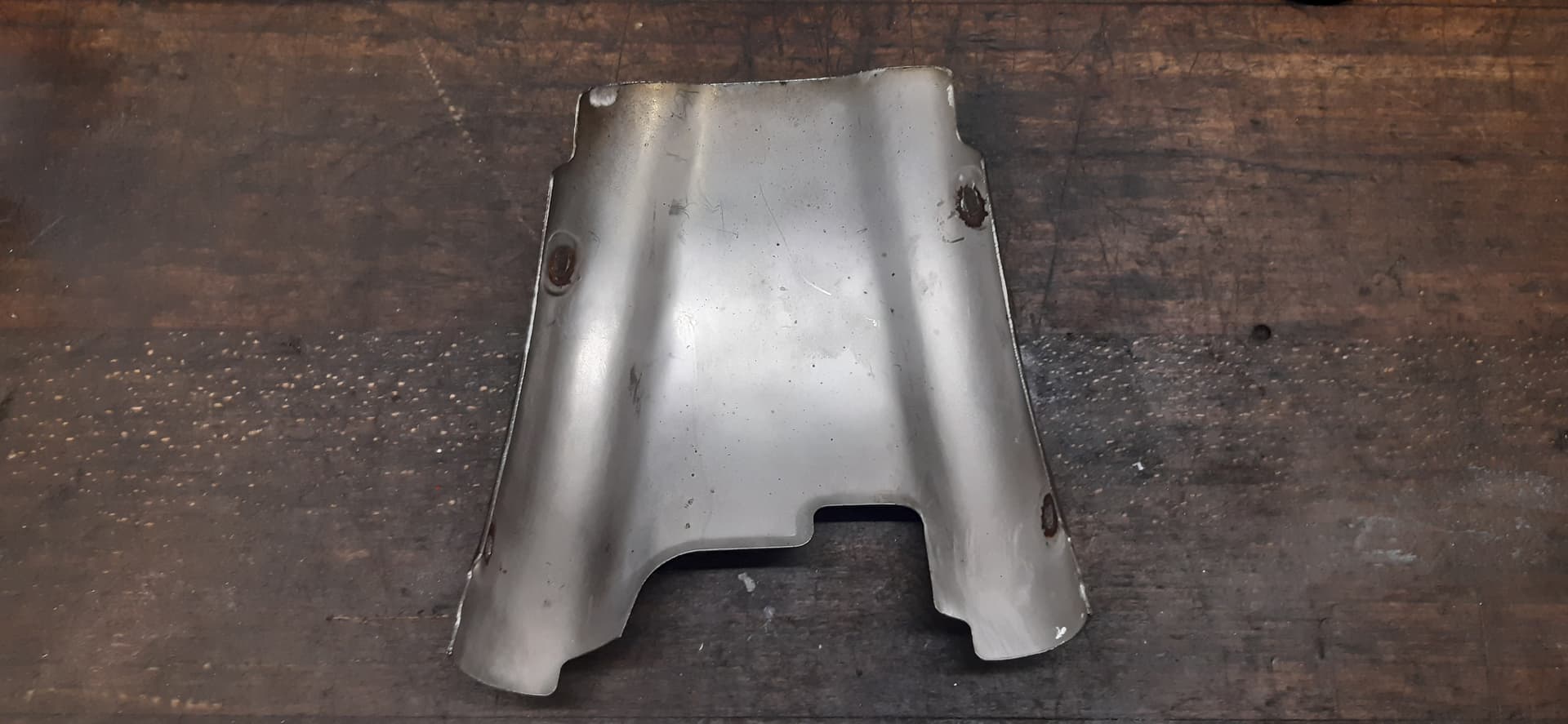
The rear shock is in good shape externally, no corrosion at all beneath the boot. Also in great shape is the rear bank exhaust heat shield, I took this off for a polish while the shock was out of the way.

That’s a really nice 750 you have there…good to see you keeping the dream alive. IMHO the best colour combo too.

The tanks do have internal “hard lines”….it may help to remove the fuel tap assembly and try to poke some wire through the little holes going into the tank…the lines may just be clogged with old fuel which has turned to sludge over the years…worth a try at least. If there is internal corrosion in the tank & lines, it may be a good idea to give it a good cleanout and possibly a “Snowfoam” treatment.

The rear shocks are not great…even when new they were poor at best..they can be serviced but I found replacing it with a YSS or Hagon transformed the rear suspension into something which is a pleasure to ride. I fitted a YSS to my ‘84 RE and it’s brilliant…I still have the original in the shed at home if I ever sell the bike or wish to refurbish it. The shock can’t really be seen from the ouside unless someone knows where to look. My bike still looks stock from the outside.

Smithy.

Thanks Smithy. I may not have put enough fuel into the tank for it to ‘flow’ out, next week I’m going to try it with my spare pump hooked up.

They should flow by gravity feed…I ran a VF1000F for years without a pump. It’s just when the fuel level in the tank is low, (~carbie height), that it struggles to flow.

Smithy.

There wasn’t a problem with the fuel tank after all, I just hadn’t put enough fuel in for it to gravity feed. With the tank on the bench I attached a spare fuel pump and bingo! I did spot the fuel tap was leaking though so I ordered and fitted a new one. I went for a Hagon shock in the end, dropped straight in and feels good. Went for a spin the other day and all was well, apart from the 20 year old tyres, a pair of Bridgestones is on order :slight_smile: It was such a long time since I’d ridden the bike I’d forgotten how light and agile it feels compared to my VFR800. Happy days!
Good to see you got it all sorted and back on the road….feels good doesn’t it..??:grin:

Smithy.

My VF750F is now unlikely to see the roads before spring so it’ll get a good clean and polish and that’ll be that. I don’t have anything to do on it because it’s done few miles since it went back on the road a couple of months ago after sitting under covers for 20 years. It was a real treat riding it again though. So easy.

I thought I share what’s in the shed at the moment, it is an interesting bike. Also, if it hadn’t of been for the problems with the early V Fours I doubt Honda would have put so much effort into the VFRs.

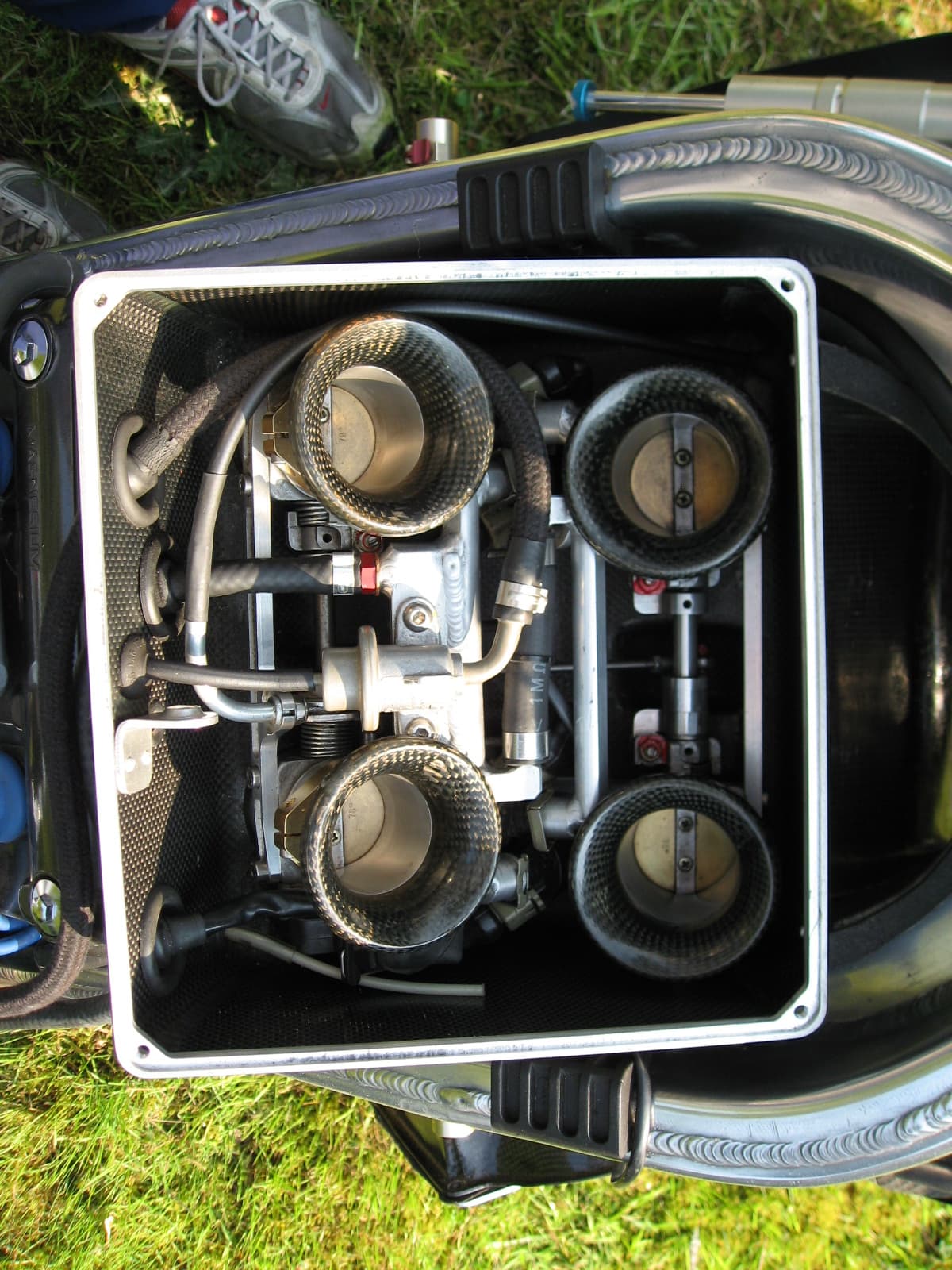
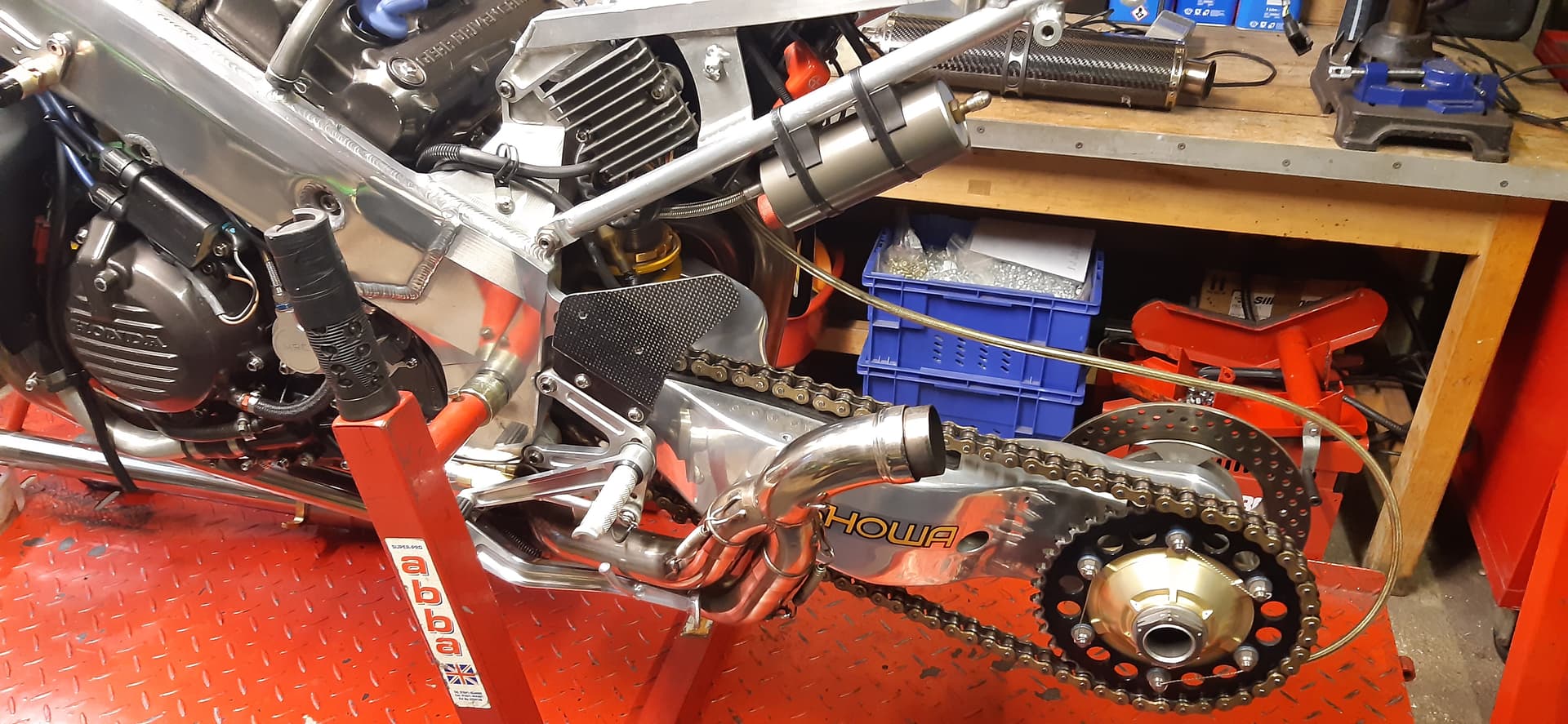
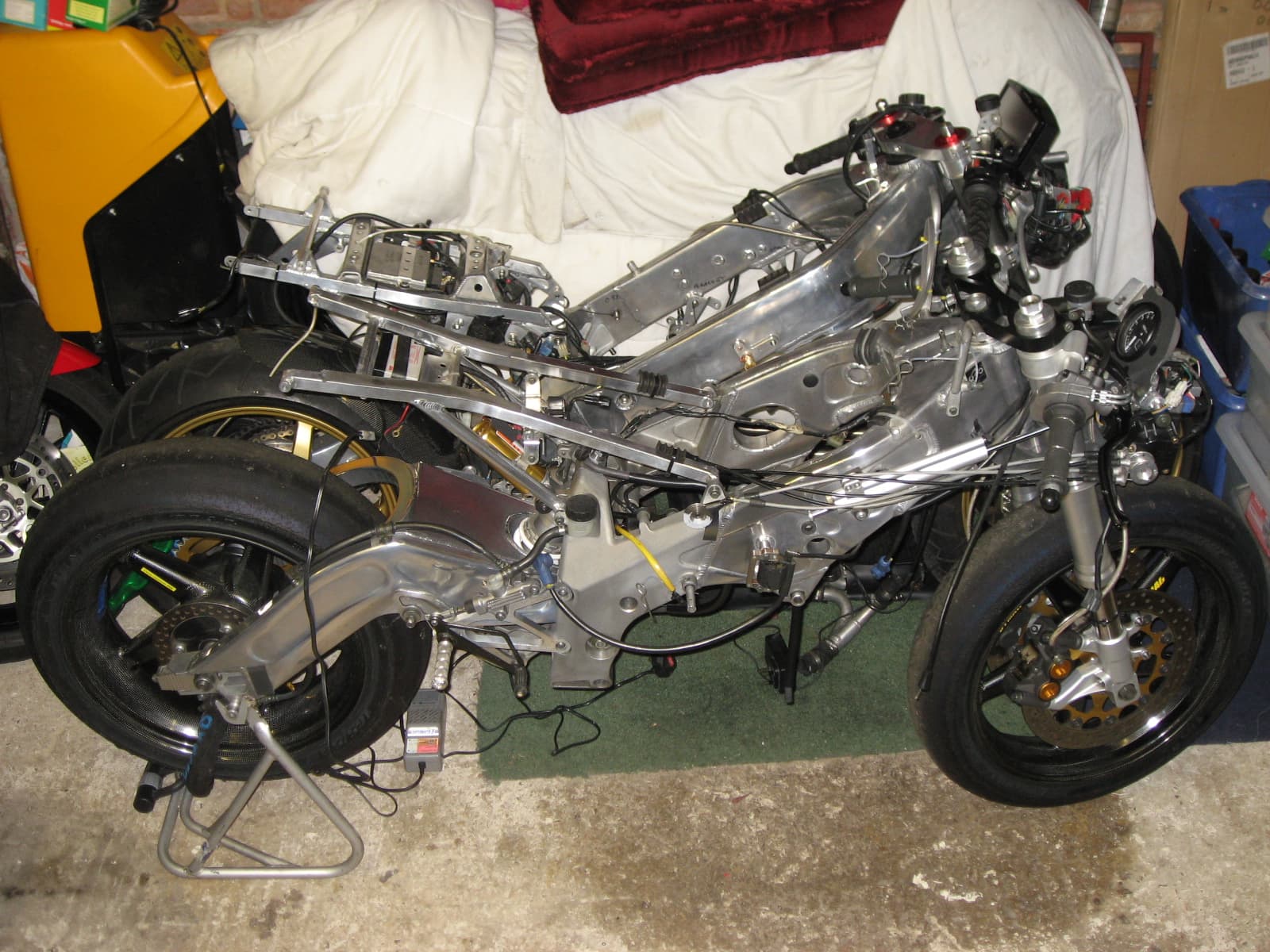
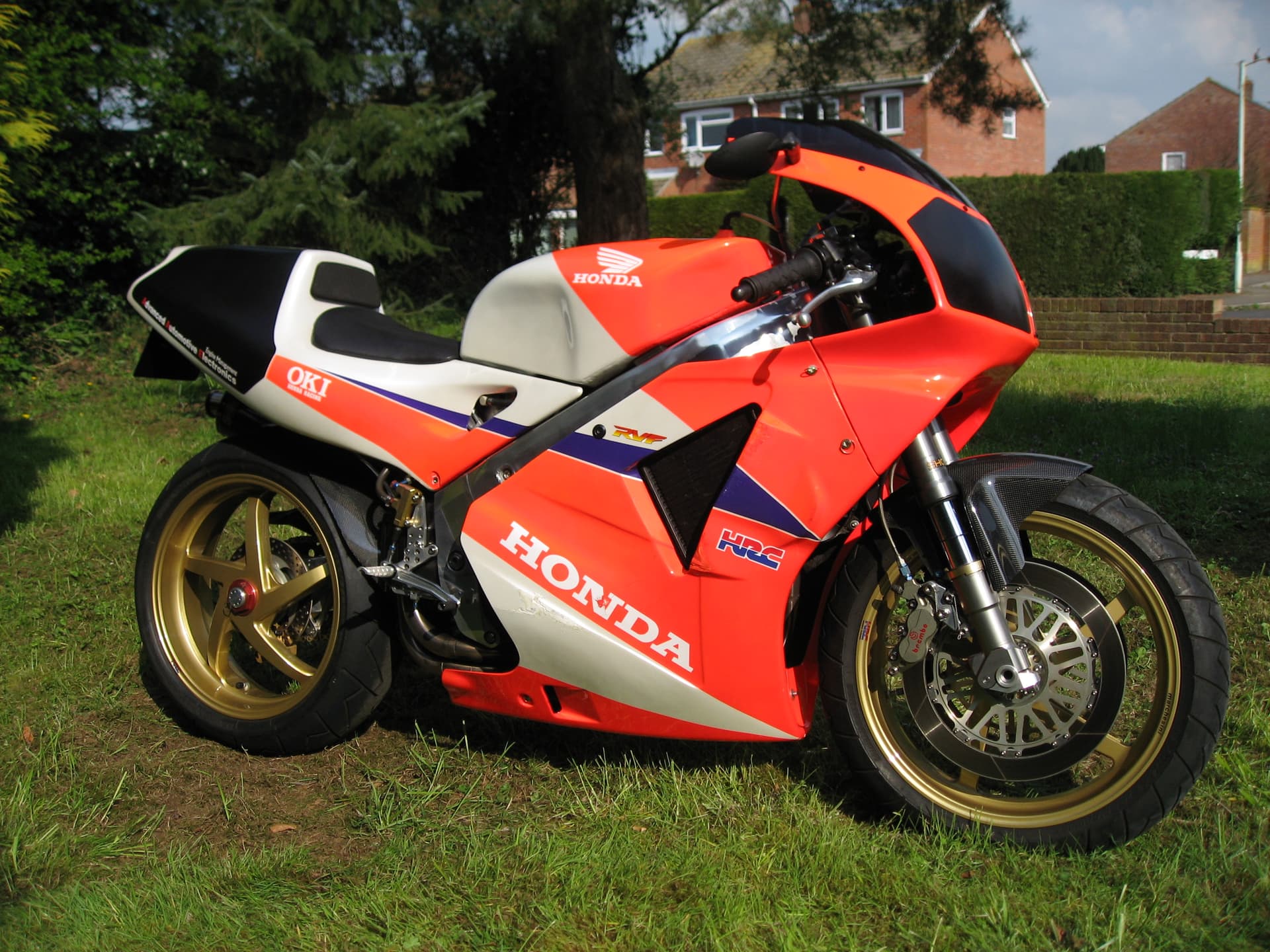
So here it is, I suppose you’d call it an Oki RVF750 ‘tribute’. It was built by a friend of mine over a number of years and completed in 2001 (I think). He had an RC30 and wanted to build this so he kept the RC30 engine and swingarm and sold most of the rest. It seems crazy now but in the late 90s RC30s were unwanted and pretty cheap. All the guy had was a picture of an RVF, he knew the wheel sizes so worked everything else out from there. He made the frame, the forks, the yokes, pretty much everything. The RC30 engine remained standard apart from fitting a deep sump but he fitted fuel injection and a big air box. One of the problems with the standard RC30 was getting it to breath so this bike has pannier radiators and a huge air scoop under the bottom yoke. The fuel injection system uses T595 injectors and a bespoke ECU. He made all of the other fuel injection system mechanical items from scratch, including the carbon fibre parts.

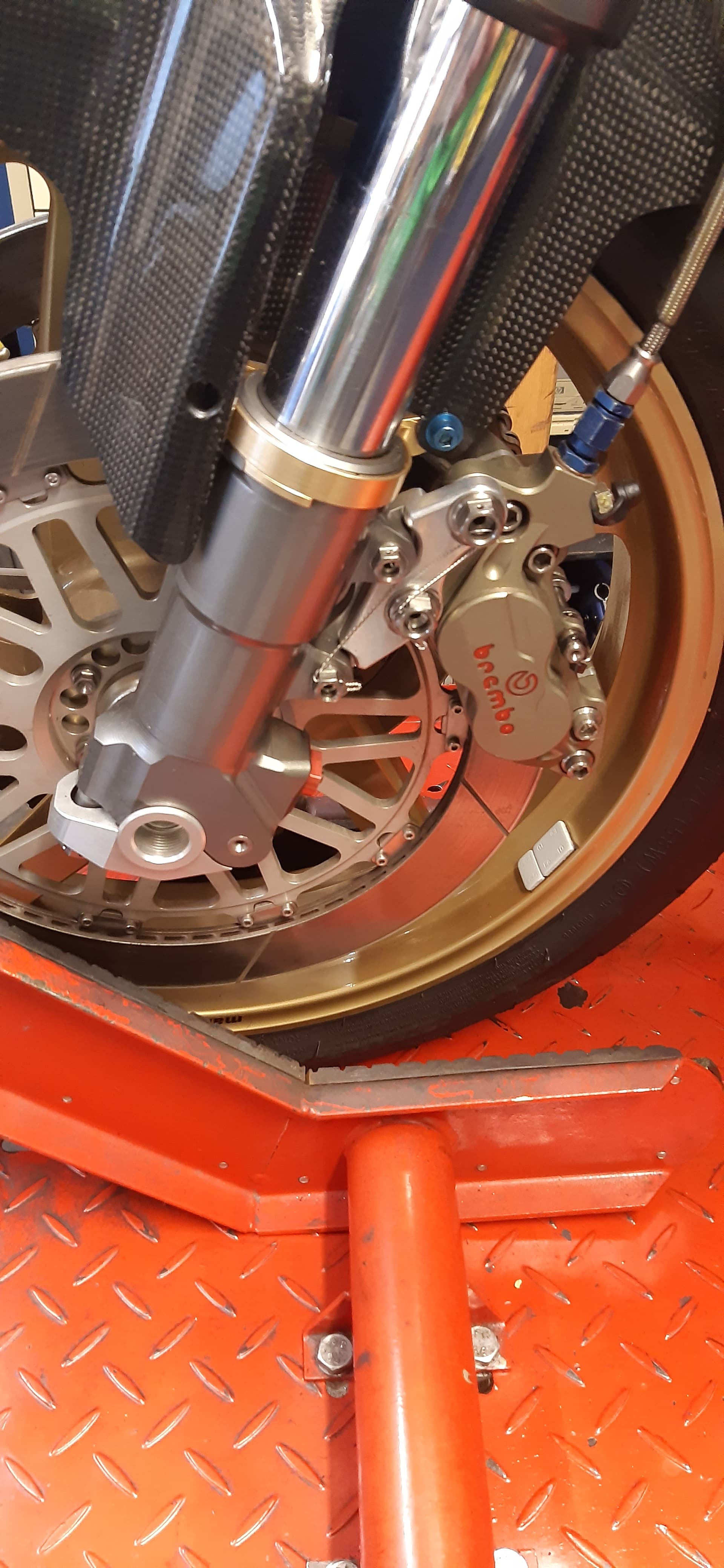
The forks started life as ZXR750 units but he machined the bottoms to be like the RVF with quick release. Discs are HRC ventilated. The rear hub is left-hand threaded.

The bike is very, very small, about as big as a VFR400. I was racing a TZ250 until a few years ago and in one of the pictures below you can see the RVF rolling chassis behind the TZ250 rolling chassis. Size and geometry are very similar.

I’ve owned the bike for about 15 years and in that time have renewed the radiators and had the engine ‘fettled’ by Tony Scott. For those that don’t know of Tony he built RC30 and RC45 engines for most of the top riders at the Isle of Man, Joey Dunlop included.

So why is it on the bench……

I’ve been having issues fouling plugs, nearly always on the #1 cylinder. I have spent hours and hours on this and may be seeing light at the end of the tunnel. When you start the engine from cold it injects extra fuel, there is no choke. When Tony worked on the engine he increased the compression ratio and I think what’s happening is the engine now takes more effort to turn over so the battery voltage drops and this is affecting the fuelling and ignition. I’ve been reading about modern spark plugs and they no longer have a coating on the insulator to protect them from neat fuel. Modern fuel injection makes sure the fuelling is spot on, with carbs this was never so precise so the plugs had to be able to cope with a good soaking of petrol, hence the protection on the insulator. I might be wrong here but I think early fuel injection and ignition system were 12 volt based, this meant if the battery voltage dropped to say 9 volts on cranking then all of the system was now running at 9 volts. The spark plug was now sparking at 75% of the intended voltage and could easily be swamped by fuel. I believe later fuel injection systems use lower regulated voltages derived from the 12 volts so are always working at the correct voltage. Anyway, what I tried was running a second battery on the bike isolated from the main battery. The main battery is for the starter and lights and a second battery for the electronics. With this set up the bike starts at the first touch of the button, it hasn’t been like that for years!

Time will tell, and I’ve thought I’ve seen light at the end of the tunnel before, but I am optimistic. I’ve yet to decide whether to fit a switch so the second battery is only used for starting from cold then switch to the main battery and can therefore be a total loss system. I suppose I could leave the second battery in use all of the time and run it total loss anyway, current drain for the electronics is low and the bike is so small I can only ride for a few miles before getting uncomfortable! The other option will be to put the second battery on the bike’s charging system but isolate it from the rest of the bike by means of a diode. We’ll see.

Anyway, that’s what I’m up to in the shed. If anyone has a view around my logic and what I’ve learned about plugs (it was mostly from the web after all) then please put me straight, I will not be offended!

Keep safe,

Chris.

3 Likes